|

|

|
Critically-acclaimed novelist Francisco Goldman on "The Art of Political Murder in Central America"
Sunday December 23rd, 2007 at 9pm on KPCC 89.3 FM
Francisco Goldman discusses the themes of his first nonfiction book, The Art of Political Murder: Who Killed the Bishop? The culmination of nine years of research, the book explores the murder of Guatemala’s leading human rights activist Bishop Juan Gerardi. Navigating between stories of killer dogs, mystery cars, and a motley crew of unlikely detectives, the story is as rich in human drama, enigma, and surprise as any novel. In this riveting talk Goldman sketches out the improbable case from top to bottom.
Recorded before a live audience at the Skirball Cultural Center, as part of the Zócalo “Public Square” Lecture Series.
Audio available after broadcast
|
ARCHIVE
|
 
|
Regular Guest Host Andrés Martinez catches up with legendary Mexican novelist Carlos Fuentes, and Guest Host Nick Goldberg, Los Angeles Times Op-Ed Editor, sits down with New York Times political reporter Matt Bai
Sunday December 16th, 2007 at 9pm on KPCC 89.3 FM
Regular Guest Host Andrés Martinez catches up with Carlos Fuentes to chat about the politics of Latin America, the effect of Mexican migration on U.S. and Mexico, and Fuentes' love of Charles Dickens and London.
New York Times political reporter Matt Bai sits down with Nick Goldberg to talk about his new book, The Argument: Billionaires, Bloggers, and the Battle to Remake Democratic Politics, which chronicles the fascinating shift of political power from "inside the beltway" to a decentralized on-line movement.
Audio available shortly
|
|

|
Former Bush speechwriter Michael Gerson on “Why We Need Heroic Conservatism”
Sunday December 9th, 2007 at 9pm on KPCC 89.3 FM
Michael J. Gerson, the speechwriter who penned many of George W. Bush's most influential speeches, is considered by many Democrats and Republicans to be the most influential White House speechwriter since the Kennedy administration's Ted Sorenson. He also served as a trusted policy adviser. He argues that if Republicans have nothing to say about challenging issues of race and poverty, they have little to say at all. He also maintains that liberals and Democrats must rediscover the essential role of religion in our common life, and, finally, America has the ability to do great good --- indeed that we have a national security interest for doing good in the world.
Recorded before a live audience at The Center at Cathedral Plaza adjacent to Cathedral of Our Lady of the Angels in downtown Los Angeles, as part of the Zócalo “Public Square” Lecture Series.
((()))* | ((Podcast))* | (Videocast)*
|
|
 
Richard Russo photo courtesy of Elena Seibert
|
Regular Guest Host Alix Ohlin sits down with essayist George Saunders and novelist Richard Russo
Sunday December 2nd, 2007 at 9pm on KPCC 89.3 FM
On the next Zócalo Radio: Regular Guest Host Alix Ohlin sits down with essayist and “genius grant” recipient George Saunders to chat about his recent book, The Braindead Megaphone. Saunders takes his Chicago roots and “inarticulate speech” and makes poetic, funny, and ultimately humane observations about everything from civilian border patrols, the crazy construction boom in Dubai, to the decline of language in contemporary media.
Richard Russo is one of America’s most compelling and compassionate storytellers. As he tells Alix Ohlin, while writing his bestseller, Empire Falls, some of his “deepest thoughts and convictions about class in America” began to come into focus. The result is his new novel, the sprawling epic, Bridge of Sighs. Alix Ohlin and Russo clearly relish this conversation, which includes an examination of a novelist’s pitfalls and pure joys.
((()))* | ((Podcast))*
|
 
|
Regular Guest Host Andrés Martinez sits down with Jorge Castañeda, former foreign minister of Mexico, and with Fred Reid, CEO of Virgin America
Sunday November 18th, 2007 at 9pm on KPCC 89.3 FM
Jorge Castañeda, named one of the Mexico’s “most insightful” intellectuals by The New York Review of Books, served as Mexican foreign minister in the Vicente Fox administration. He is the author of the recently published Ex Mex: From Migrants to Immigrants. In this cogent interview with Regular Guest Host Andrés Martinez, Castañeda presents a picture of immigration laws untethered from economic reality – and an ambivalent populace that “wants it both ways” when it comes to this hot-button issue.
Fred Reid has held executive roles with four of the world's largest airlines. As Chief Executive Officer of San Francisco-based Virgin America, he has launched a spirited attempt to make flying “fun” again. In this one-on-one with Andrés Martinez, Reid candidly assesses the risks of the task, outlines what the Department of Transportation required for the company’s launch, and identifies those who tried to ground the venture before it got airborne.
((()))* | ((Podcast))*
|
 |
The Flat Universe: Caltech Astrophysicist Chuck Steidel with Guest Host K.C. Cole
Sunday November 11th, 2007 at 9pm on KPCC 89.3 FM
Caltech astrophysicist Chuck Steidel has found dozens of infant galaxies. For him, collecting new data from the telescope is like “a crossword fanatic getting a fresh pile of puzzles.” In this lucid, jargon-free science chat, he tells K.C. Cole how two opposing views of the universe were both correct, and the term “dark matter” was coined to explain it all. Observable matter, he says, “is painted on to the skeleton” of the cosmos by dark matter. Through his work at the Keck Observatory, Steidel explores the nature of the painting process in action.
((()))* | ((Podcast))*
|
 |
Mayor Antonio Villaraigosa and Jim Newton, Editor of the Los Angeles Times Editorial Pages
Sunday November 4th, 2007 at 9pm on KPCC 89.3 FM
Los Angeles Mayor Antonio Villaraigosa entered office two years ago with great fanfare, landing the cover of Newsweek and receiving recognition as the city's first Latino mayor in over a century. In this exclusive interview, recorded at BP Hall in Walt Disney Concert Hall as part of the Zócalo “Public Square” Lecture Series, the Mayor answers questions on the state of the city’s schools, public safety, the housing crisis, traffic congestion, immigration policy and the question of character. Villaraigosa admits to understanding his constituents’ “disillusionment” with events of last summer, but points to the successes of his administration – including a greatly increased number of after-school programs, a well-financed housing trust fund, and a Los Angeles “safer today than any time since 1956 on a per-capita basis.”
((()))* | ((Podcast))*
|
 
|
Regular Guest Host Andrés Martinez talks with journalist Matt Welch about John McCain and Zócalo Radio Producer Peter Stenshoel chats with German Public Radio’s Kerstin Zilm about her dream job covering California
Sunday October 28th, 2007 at 9pm on KPCC 89.3 FM
Matt Welch’s book, McCain: The Myth of a Maverick, contends that Republican Senator and presidential candidate John McCain is not the unpredictable cipher that much of the media have labeled him. Welch, Assistant Editor of the Los Angeles Times Editorial Page, tells regular guest host Andrés Martinez about McCain’s consistent set of values – from a more robust interventionist military posture than any president since Theodore Roosevelt to the campaign finance reform initiatives that enraged fellow conservatives – and how the Arizona Senator plans to use the Federal Government to eradicate cynicism and restore faith and confidence in The United States.
Kerstin Zilm has what she calls a reporter’s “dream job” – covering all of California, Alaska and Hawaii. In her work for the German Public Radio network ARD, she reports on everything from immigration reform to celebrity mania. In a chat with Zócalo Radio’s Peter Stenshoel, Zilm explains what Germans don’t “get” about L.A., and remembers the excitement of traveling into East Germany as an intern reporter covering the fall of the Berlin Wall.
((()))* | ((Podcast))*
|
 
|
Regular Guest Host Meghan Daum Sits Down with Ann Patchett and Lionel Shriver
Sunday October 21st, 2007 at 9pm on KPCC 89.3 FM
Ann Patchett, award-winning author of Bel Canto, Truth and Beauty, and Run, likes to “move beneath the radar.” The Nashville resident eschews glamorous literary parties for a simpler life. In a candid chat with regular guest host and Los Angeles Times columnist Meghan Daum, Patchett talks of politics as a vehicle for “profound good,” gets to the root of her narrative voice, and spills her secret to becoming a self-supporting writer.
Lionel Shriver’s controversial novel, We Need to Talk About Kevin, won the prestigious Orange Prize in 2005. Her new book, The Post-Birthday World, uses a parallel universe to examine the question of “whom we choose to love,” and how the rest of our lives unfolds from that choice. In this engaging back-and-forth, Meghan Daum probes the motivation behind both books, and Shriver explains her theory of “full-circle feminism.”
((()))* | ((Podcast))*
|
 |
An Evening with Michael Govan
Moderated by Ann Philbin, Director of the Hammer Museum
Sunday October 14th, 2007 at 9pm on KPCC 89.3 FM
43-year-old Michael Govan recently completed his first year as director of the Los Angeles County Museum of Art. Arriving to the west coast after landmark work at the Dia Art Foundation at The National Gallery of Art and New York City’s Guggenheim Museum, Govan visits Zócalo to chat about the role of the artist in the world, the exciting and unusual future of LACMA’s campus, and why Los Angeles figures so prominently in the future of international art.
The evening is moderated by Ann Philbin, Director of the Hammer Museum, and recorded before a live audience at the Los Angeles Central Library as part of the Zócalo “Public Square” Lecture Series.
((()))* | ((Podcast))* | (Videocast)*
|
 |
Will Grand Avenue Live Up to the Hype?
Sunday October 7th, 2007 at 9pm on KPCC 89.3 FM
The remarkably ambitious Grand Avenue Project has been hailed as a key to the urban rejuvenation of downtown Los Angeles. Combining architectural, streetscape, and park-planning elements, with huge amounts of new retail and residential space, the project’s sheer reach recalls much earlier eras of urban design and scope. Zócalo assembled a panel to examine the pros and cons of the project.
Recorded before a live audience on September 25th at the Museum of Contemporary Art, our panel -- Los Angeles Times architecture critic Christopher Hawthorne, Bill Witte, president of The Related Companies of California, Dana Cuff, professor of Urban Planning at UCLA, and Los Angeles City Councilmember Jan Perry -- consider the future of Bunker Hill and beyond
(((t)))* | ((Podcast))* | (Videocast)*
|
 |
James Ellroy, "L.A.: Come on Vacation, Go Home on Probation"
Sunday September 30th, 2007 at 9pm on KPCC 89.3 FM
James Ellroy, known as “the Demon Dog of American Crime Literature,” is one of the world’s best-selling crime writers, and author of many books including the L.A. Quartet: The Black Dahlia, The Big Nowhere, L.A. Confidential, and White Jazz. In this lecture, recorded as part of the Zócalo “Public Square” Lecture Series, Ellroy dazzles a live audience at the Los Angeles Central Library. In a poetic and profane eulogy, he praises Los Angeles, where he was able to take what he calls his informal L.A. education: “streets walked, jails inhabited, tragedy suffered, and books read, and turn it into something substantive, and utterly compelling, and great.” He speaks of two L.A.s: the placid 1950’s version, and the other version -- “a secret, smog-shrouded netherworld.”
((()))* | ((Podcast))* | (Videocast)*
|
   |
A Conversation with Director/Screenwriter Robin Swicord and Actors Kathy Baker and Hugh Dancy
Moderated by Patt Morrison, L.A. Times columnist and host of "Patt Morrison" on KPCC
Sunday September 23rd, 2007 at 9pm on KPCC 89.3 FM
Screenwriter of such films as Memories of a Geisha and Little Women, and now first-time director, Robin Swicord, who just released The Jane Austen Book Club, talks to L.A. Times Columnist and KPCC host, Patt Morrison, about how her film, based on Karen Joy Fowler’s best-selling novel, depicts our fractured society in search of a “semblance of community,” about her first Austen adaptation (with paper dolls!) and how most of us settle for tiny bits of life instead of the “full meal.” Swicord and Morrison are joined by two cast members from The Jane Austen Book Club: Kathy Baker, whose film credits include The Cider House Rules and Cold Mountain; and Hugh Dancy, whose film credits include Blackhawk Down and King Arthur.
Recorded before a live audience at Harmony Gold Theatre as part of the Zócalo “Public Square” Lecture Series.
((()))* | ((Podcast))* | (Videocast)*
|
|
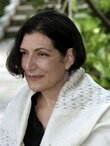
Alma Guillermoprieto on Mexicanness and Urban Critic Norman Klein on L.A.’s Strange History and Even Stranger Future
Sunday September 16th, 2007 at 9pm on KPCC 89.3 FM
The brilliant writer (The New Yorker and The New York Review of Books) and MacArthur “Genius Award” recipient Alma Guillermoprieto visits Zócalo to explore evolving notions of Mexican national identity. Reflecting on her life as a writer, after a dance career in the “cosmopolitan world of art,” Guillermoprieto tells of her homecoming to Mexico after many years in Nicaragua, El Salvador, Paris and Brazil. She candidly speaks of her ambivalence toward her home country and how she came to write about the garbage dumps of Mexico City and Mariachi music. Recorded live as part of the Zócalo “Public Square” Lecture Series at B.P Hall in Walt Disney Concert Hall.
Urban Critic Norman Klein, one of L.A.’s foremost interpreters, tells guest host Adolfo Guzman Lopez why he prefers “the accidents of organic mistakes and the curiosities of ruins and rebuilt things” to the architecture of artifice and “cultural tourism” such as the Grand Avenue Project. He also talks of his home in Highland Park with “strange steps that go up in corners,” and how “traffic problems are splitting the city into three parts.”
* | (Videocast)*
|
.gif) 
|
Regular Guest Host Andrés Martinez Catches Up With Fabian Núñez and Bob Hertzberg
Sunday September 9th, 2007 at 9pm on KPCC 89.3 FM
Fabian Núñez was 37-years-old when he became Speaker of the California State Assembly. Three years on, the Democrat known for several bipartisan achievements as well as his affable nature, tells Andrés Martinez about working with Governor Schwarzenegger to end the health care crisis, his thoughts on redistricting, the trouble with term limits, and his passion for soccer.
Bob Hertzberg, the former Speaker of the California State Assembly, now runs a green energy company that takes him all over the globe, but that doesn’t mean that he’s no longer a big player in the public debate. Andrés Martinez catches up with Hertzberg in a fast-paced, dynamic exchange about what the one time mayoral candidate would have done as mayor of L.A., what he thinks of Antonio Villaraigosa’s job performance, his advice for Hillary Clinton, and how traveling the world has changed his outlook on life.
)* | ((Podcast))*
|
 |
"Should Congress Pass the Korea Free Trade Agreement?"
U.S. Rep. Diane Watson, South Korean Ambassador Lee Tae-Sik, Jessie Swanhuyser, and Brian Peck.
Moderated by Andrés Martinez, Irvine Senior Fellow at the New America Foundation
Sunday September 2nd, 2007 at 9pm on KPCC 89.3 FM
The recently negotiated Free Trade Agreement between the United States and Korea is the most ambitious trade deal the U.S. has contemplated since NAFTA. Congress has yet to vote on it. For Los Angeles, with the largest population of Koreans outside of Korea, the economic consequences of the agreement’s passage could be huge. Recently, Zócalo invited U.S. Representative Diane Watson, South Korean Ambassador Lee Tae-Sik, Jesse Swanhuyser of the California Fair Trade Coalition, and former U.S. trade representative Brian Peck to the table to lay out the pros and cons of this agreement. The debate includes discussion of the historic ties and strategic interests shared by Korea and the U.S., worker safety concerns, and whether completion of the agreement was rushed in order to beat the expiration of “fast-track” authority enjoyed by the U.S. President in trade negotiations. The hope for reunification between the two Koreas rounds out the evening.
This event, part of the Zócalo “Public Square” Lecture Series, was recorded August 23rd before a live audience at the Southwestern Law School, in the historic Bulloc'sk Wilshire building in Koreatown.
* | ((Podcast))* | (Videocast)*
|
 |
Gustavo Arellano with Sam Quinones and Anat Rubin with Peter Irons
Sunday August 26th, 2007 at 9pm on KPCC 89.3 FM
Sam Quinones considers himself a storyteller. A native of Claremont, he learned Spanish and spent ten years in Mexico writing about migrants on their way north. He has collected those stories in two highly regarded prose collections (True Tales of Another Mexico and Antonio’s Gun and Delfino’s Dream). Now with the L.A. Times, Quinones speaks to OC Weekly columnist Gustavo Arellano about the murdered balladeer of Norwalk, migrants in small-town Kansas, and his life with “the last Trotskyites in Cuernavaca.”
Peter Irons, constitutional scholar and bestselling author (May It Please the Court), is decidedly supportive of separation of church and state, but wanted to understand those holding the opposing viewpoint. The result, God On Trial: Dispatches from America’s Religious Battlegrounds, takes a close look at a handful of cases and the colorful characters on both sides of the courtroom aisle. Irons tells Daily Journal reporter Anat Rubin about a the Ten Commandments displayer sued by his own cousin, the small town Texas high school football custom which went all the way to the Supreme Court, and starkly divided worldviews about majority and minority rights. He concludes that despite the divides, we are a people who respect laws.
* | ((Podcast))*
|
 |
“An Evening with Larry Wilmore”
Moderated by Oscar Garza, Editor-in-Chief, Ciudad Magazine
Sunday August 19th, 2007 at 9pm on KPCC 89.3 FM
The Daily Show’s "Senior Black Correspondent,” Larry Wilmore, visited Zócalo to discuss his thirty-year career in television with Oscar Garza, Editor-in-Chief of Ciudad Magazine. Wilmore, a Southern California native, delivers shrewd and hilarious observations while recounting his early days as a stand-up comedian, and his subsequent work variously as writer, producer, or actor, for In Living Color, The Fresh Prince of Bel-Air, The PJs, The Bernie Mac Show, The Office, and, of course, The Daily Show.
Recorded before a live audience at the Los Angeles Central Library as part of Zócalo’s “Public Square” Lecture Series
* | ((Podcast))* | (Videocast)*
|
 
|
What’s Up, REDCAT? Mark Murphy, REDCAT’s Executive Director.
Also, Ilona Katzew, LACMA’s Curator of Latin American Art.
Interviews by Jennifer Berry and Adolfo Guzman Lopez
Sunday August 12th, 2007 at 9pm on KPCC 89.3 FM
REDCAT, the CalArts venue housed at the Walt Disney Concert Hall in downtown L.A., is increasingly recognized for its creative programming. Its mandate is “to provide a Los Angeles home for new, cutting-edge performance and art – a laboratory where artists can push boundaries, experiment with forms, and blend disciplines, cultures and ideas.” Mark Murphy, REDCAT's executive director, visits Zócalo for a talk with Jennifer Berry. Berry asks Murphy about the motives behind the decision-making process, and the challenge of maintaining a high profile venue.
Ilona Katzew is a specialist on Mexican Art during the colonial period. She has just mounted the massive “Arts in Latin America 1492 – 1820,” at the Los Angeles County Museum of Art, in collaboration with her counterparts in Philadelphia and Mexico City. In this conversation with Southern California Public Radio’s Adolfo Guzman Lopez, Katzew brings to life this little known history of art in the Americas.
* | ((Podcast))*
|
 |
“Can the Ports Clean the Air Without Choking the Economy?”
Moderated by Rick Wartzman, Director of The Drucker Institute at Claremont Graduate University
Sunday August 5th, 2007 at 9pm on KPCC 89.3 FM
The ports of Los Angeles and Long Beach—which together make up the nation's busiest harbor complex and one of the key engines of the Southern California economy—are poised for an 18-Wheel Revolution. In April, they unveiled a plan to slash diesel pollution from the 16,000 trucks that haul goods to nearby rail yards and warehouses by 80%. And that's only the beginning. The plan—which still needs final approval--also seeks to upgrade conditions for truck drivers, who some say work in virtual "sweatshops on wheels." But is the plan practical? Will it undermine the ports competitiveness' and drive trade elsewhere? Is it just a backdoor way for the Teamsters union to organize drivers?
Key players from both sides of this battle along the waterfront--S. David Freeman, president of the L.A. board of Harbor Commissioners, Patricia Castellanos, co-director of the Clean and Safe Ports Campaign, transportation policy consultant Nancy Pfeffer, and Michael Lightman, president of Great Freight Inc.--visited Zócalo to hash it out. The broadcast includes questions from the audience.
Recorded live as part of the Zócalo “Public Square” Lecture Series at Banning’s Landing Community Center in Wilmington.
* | (Videocast)*
|
.gif) |
An Evening with Jonathan Gold
Moderated by Monica Corcoran, Style Editor at Variety
Sunday July 29th, 2007 at 9pm on KPCC 89.3 FM
Pulitzer Prize-winner Jonathan Gold is the final word on food in Los Angeles. The L.A. Weekly writer has eaten at thousands of restaurants in Los Angeles alone, often scouring foreign-language papers in which he could only understand restaurant addresses, or simply driving around town and pulling over when the mood struck.
In this interview, recorded live at the Los Angeles Central Library as part of the Zócalo “Public Square” Lecture Series, host Monica Corcoran, Style Editor at Variety, coaxes surprising answers as Jonathan Gold regales the audience with a rich repast of anecdotes and food adventures.
((()))* | (Videocast)*
|
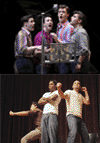 |
Two Theatre Ensembles: Jersey Boys and N*GGER WETB*CK CH*NK
Interviews by Jennifer Berry
Sunday July 22nd, 2007 at 9pm on KPCC 89.3 FM
Jersey Boys, the Tony Award-winning smash hit at the Ahmanson, is attracting audience members who’ve never stepped foot in a theater. Find out what makes this history of Frankie Valli’s Four Seasons so compelling. Jennifer Berry interviews the principal cast members Erich Bergen, Michael Ingersoll, Christopher Kale Jones, and Deven May.
An ensemble of quite a different nature is N*GGER WETB*CK CH*NK, a comedy creatively examining the complex realities of race in America. Jennifer Berry examines this fresh look at old evils with cast members Miles Ellington Gregley, Allan Axibal, and Rafael Agustin.
((()))*
|
.gif) |
“Hail to the Chief? A Conversation with Bill Bratton”
Moderated by Jim Newton, Times Editorial Page Editor
Sunday July 15th, 2007 at 9pm on KPCC 89.3 FM
William J. Bratton, America's widely acclaimed top cop, arrived in Los Angeles in 2002 to head the country's third-largest police department. Since then he's overseen a 27% decline in homicides and a 29% decline in serious crimes over the past five years. He has also been both praised and criticized for his handling of federal reform mandates, for releasing names of major gang members, and for his response to controversial uses of police force, including the death of 13-year-old Devin Brown and the May MacArthur Park May Day Melee. Shortly before his reconfirmation, Chief Bratton sat down with Jim Newton, who covered the LAPD for the Times in the mid-1990s, to talk about crime in the city, controversy in the LAPD, and goals for his second term.
Recorded before a live audience at Barnsdall Art Park as part of the Zócalo “Public Square” Lecture Series.
((()))* | (Videocast)*
|
 |
“Can the LA Times be Saved?”
Moderated by Los Angeles Magazine Editor-in-Chief Kit Rachlis
Sunday July 8th, 2007 at 9pm on KPCC 89.3 FM
Like newspapers across the country, the Los Angeles Times has struggled to capture online readership and fight declining circulation. To cut costs and stay relevant, The Times has undergone massive layoffs, well-publicized staff shifts, squabbles and major redesigns. Can The Times remain a prominent and profitable news source for Southern California, the country, and the world? What effect will all these changes have on the paper’s quality?
Zócalo invited Times editor Jim O’Shea, managing editor Leo Wolinsky, general manager Dave Murphy, and LATimes.com executive editor Meredith Artley to discuss the fate of one of LA’s most valuable civic institutions.
Recorded live at the Los Angeles Central Library as part of the Zócalo “Public Square” Lecture Series.
((()))* | (Videocast)*
|
 |
“How to be a Genius Without Even Trying: A Conversation with Adam Carolla”
Conversation with Los Angeles Times columnist Meghan Daum
Sunday July 1, 2007 at 9pm on KPCC 89.3 FM
Radio personality Adam Carolla visits Zócalo for a conversation with Los Angeles Times columnist Meghan Daum. Their funny, lively repartee touches on the difference between high and low culture, public radio versus commercial radio audiences, and Carolla’s obsessions with cars and strip clubs. He speaks of growing up in North Hollywood and the unlikely way he broke into radio. Recorded live at the Skirball Cultural Center as part of the Zócalo “Public Square” Lecture Series.
(()))* | (Videocast)
|
  
|
Art and Place: The Work of Susan Vreeland and Gronk.
Also: Michael Schlitt and the Re-emergence of Salons
Interviews by Jennifer Berry and Adolfo Guzman Lopez
Sunday June 24, 2007 at 9pm on KPCC 89.3 FM
Acclaimed writer Susan Vreeland takes art masterpieces as the starting point for her novels. Her latest, Luncheon of the Boating Party, is about the painter Auguste Renoir and the fourteen people featured in the painter’s eponymously named painting. Zócalo’s Jennifer Berry speaks with Vreeland about Renoir’s life, 1880’s Parisian culture, and the structure of her novel.
Gronk, the self-described “Chicano artist” from East L.A., tells Southern California Public Radio’s Adolfo Guzman Lopez why he loves to walk the streets of downtown Los Angeles, details his early pranks as a punk artist, and explains the evolving nature of his multi-disciplinary work.
Michael Schlitt is a founding member of The Actors’ Gang. He has since left the well-known theater ensemble and is currently hosting salons: private homes opened for performance and “passionate conversation.” He tells Jennifer Berry about the impetus behind - and his unique approach toward – a uniquely Los Angeles salon.
((()))*
|
 
|
Paul Hawken: Blessed Unrest - The Largest Movement in the World
David Roediger: On Being White in America
Interviews by Cheryl Devall, Deputy News Editor, Southern California Public Radio
Sunday June 17, 2007 at 9pm on KPCC 89.3 FM
Paul Hawken is a noted environmentalist, businessman, writer, tech entrepreneur, and organizational/cultural theorist. In his new book, Blessed Unrest: How the Largest Movement in the World Came into Being and Why No One Saw It Coming, Hawken contends that a multiplicity of small and large non-governmental organizations, or NGOs, working variously for ecological or social justice issues, are evolving -- without even knowing it -- into "the largest movement in the world." The movement is not centralized, has no leader, no hierarchy, not even a name, and yet provides hope for a sustainable future.
David Roediger is professor of history at the University of Illinois. His research focuses on race and class in the United States, including an examination of “whiteness.” His books include The Wages of Whiteness: Race and the Making of the American Working Class. In this interview, Roediger explains why the struggle over race in America is still not over and why, despite third world immigration, the power of whiteness lives on.
((()))*
|
|
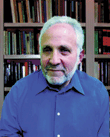
James Mann and Dru Gladney: “China - Global Power, Global Image”
Interviews by Rob Schmitz, Los Angeles Bureau Chief of “The California Report”
Sunday June 10, 2007 at 9pm on KPCC 89.3 FM
James Mann is a distinguished journalist and historian who covered China for the Los Angeles Times. In his second book on the emergent global power, The China Fantasy: How Our Leaders Explain Away Chinese Repression, Mann targets American policymakers who have dispensed the soothing and dangerously misleading notion that China’s authoritarianism will inevitably give way to democracy as its growing middle class demands more rights and freedoms. Mann raises an awkward and important question: What if China doesn’t democratize and instead becomes a capitalist totalitarian state?
Dru Gladney is President of the Pacific Basin Institute and Professor of Anthropology at Pomona College. He is author of Dislocating China: Muslims, Minorities, and Other Subaltern Subjects. Until quite recently, Western scholars have tended to accept the Chinese representation of non-Han groups as marginalized minorities. Gladney challenges this simplistic view, arguing instead that disenfranchised Muslims and other ethnic minorities have played a major role in how the Chinese have defined themselves.
((()))*
|
 
|
Vanda Vitali: “Natural History’s New Frontier”
Kirsten Vangsness and Scott Wolf: The Geffen Playhouse Production of “Fat Pig”
Interviews by Adolfo Guzman Lopez of Southern California Public Radio and Playwright Jennifer Berry
Sunday June 3, 2007 at 9pm on KPCC 89.3 FM
Vanda Vitali, VP of Public Programs at the Natural History Museum of Los Angeles County, has conceived and produced acclaimed exhibits and an ongoing performing arts series, First Fridays. She’s played a pivotal role in the institution's New Museum Project. Adolfo Guzman Lopez gets the scoop on Vitali’s re-imagined role for natural history museums.
Neil LaBute’s “Fat Pig,” now playing at the Audrey Skirball Kenis Theater at the Geffen Playhouse, has people talking about its theme – obesity and love in an appearance-obsessed society – and also for the startling manner in which the tale unfolds. Kirsten Vangsness and Scott Wolf, the drama’s principal actors, talk to Zocalo’s Jennifer Berry.
((()))*
|
 |
“Is California Ready for its Close-up?”
Moderated by David Hiller, Publisher of the Los Angeles Times
Sunday May 27, 2007 at 9pm on KPCC 89.3 FM
As California catapults its presidential primary from June to February, how will it impact the race for the White House? Times op-ed columnists Ron Brownstein, Rosa Brooks and Jonah Goldberg join Times editorial writer Robert Greene and Times Editorial Page Editor Jim Newton to discuss how an early California primary is likely to alter the substance and dynamic of the race.
Recorded before a live audience at the California Institute of Technology as part of the Zócalo “Public Square” Lecture Series.
((()))* | (Videocast)*
|
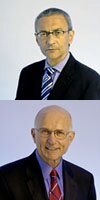 |
John Podesta and Larry Korb: “Can Progressives Save Iraq?”
Moderated by Eric Garcetti, Los Angeles City Council President
Sunday May 20, 2007 at 9pm on KPCC 89.3 FM
Former Clinton White House Chief of Staff John Podesta, President and CEO of the Center for American Progress (CAP), along with military expert and CAP senior fellow Larry Korb visit Zócalo to discuss the pros and cons of the Democrats’ Iraq strategy and ask what Progressives can do to make the best of a bad situation. As the U.S. enters its fifth year of war in Iraq, the nation stands at a critical juncture in its foreign policy. With increased U.S. forces entering Iraq, a debate is raging in Washington over the Bush administration’s “New Way Forward.” Podesta and Korb outline an exit strategy they call “Strategic Redeployment” and discuss how Iraq will continue to shape domestic politics. Korb has recently returned from Iraq and will provide an assessment of the situation on the ground.
Recorded before a live audience at the Los Angeles Central Library as part of the Zócalo “Public Square” Lecture Series.
((()))* | (Videocast)*
|
 |
"Who Really Runs L.A.?"
Kerman Maddox, Dave Zahniser, Jaime Regalado and Jesse Katz
Moderated by Mariel Garza of the Los Angeles Daily News
Sunday May 13th, 2007 at 9pm on KPCC 89.3 FM
Who runs Los Angeles? It's not just the mayor. It's not just the City Council. And it's not just a handful of rich white men. Los Angeles is no ordinary city, and its non-traditional cast of power brokers and political players span the socioeconomic and ethnic divides. But who are they? How did they acquire their power? And how do they wield it? Political consultant Kerman Maddox, LA Weekly reporter Dave Zahniser, political scientist Jaime Regalado, and Los Angeles Magazine writer Jesse Katz visited Zócalo to square off in a raucous and informative discussion of L.A.'s municipal politics, warts and all.
Recorded before a live audience at the Los Angeles Central Library as part of the Zócalo “Public Square” Lecture Series.
((()))*
|
 |
Not on Our Watch: Conflict and Response
John Prendergast, Albert Meijer and Emily Rose
Interviews by Peter Stenshoel and Jennifer Berry
Sunday May 6th, 2007 at 9pm on KPCC 89.3 FM
John Prendergast is a leading American human rights activist focused on bringing international attention to the genocide in Sudan and the atrocities by the Lord's Resistance Army in Northern Uganda. He has just released a book co-written with Hotel Rwanda actor Don Cheadle, called Not On Our Watch: The Mission to End Genocide in Darfur and Beyond. He speaks frankly with Zócalo Radio’s producer Peter Stenshoel about his solutions to the “seemingly intractable” problems of Africa and the secret of his unabashed hope for the world.
Albert Meijer and Emily Rose are performing “Wounded,” a play focusing on the problems and frustrations faced by wounded American soldiers once they’ve returned home from war. The L.A. Weekly and Los Angeles Times each placed the play in the “recommended” category, and one UK reviewer called it “perhaps the best play I have seen in many years.” Zócalo Radio’s Jennifer Berry hosts this moving interview.
((()))*
|
 |
Rafe Esquith and Doug Kaback: “Teach Like Your Hair’s On Fire”
Interviews by Mary Lou Basaraba and Jennifer Berry
Sunday April 29th, 2007 at 9pm on KPCC 89.3 FM
As Rafe Esquith describes it, he was once a discouraged classroom teacher who considered himself a failure. Not giving up, Esquith developed techniques to help himself and eventually other teachers fuel a passion for learning among students. He has won international recognition and honors for his classroom techniques, including the National Medal of Arts award. His book, Teach Like Your Hair’s On Fire, offers sage advice and encouragement for classroom teachers. In a conversation with educator Mary Lou Basaraba, Esquith outlines the process from his early failures to the stunning successes of his fifth grade class at the Los Angeles Unified School District’s Hobart Elementary School.
Doug Kaback is artistic director at the Teen Age Drama Workshop, a six-week intensive training session for young people who are interested in theater. Celebrating its 50th year, it is the longest running teen-focused workshop in the nation with an impressive list of alumni. Kaback, a playwright, director, actor, and faculty member at California State University Northridge, speaks to Zócalo Radio’s Jennifer Berry about his experiences working with gifted young theater artists.
((()))*
|
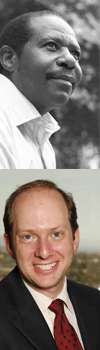 |
Paul Rusesabagina and E. Randol Schoenberg
“Ordinary Men; Extraordinary Lives”
Interviews by Los Angeles Times Health Reporter Daniel Costello and radio producer Nate DiMeo
Sunday April 22nd, 2007 at 9pm on KPCC 89.3 FM
Paul Rusesabagina was the first Rwandan manager of the Hotel Milles Collines, a European-owned luxury hotel in Rwanda. During the Rwandan genocide, which started in April of 1994, Rusesabagina used his influence and connections to shelter over 1,260 Tutsis and moderate Hutus from being slaughtered by the Hutu-led militias. His story was featured in the film "Hotel Rwanda," and his autobiography is An Ordinary Man. Paul Rusesabagina tells Daniel Costello, Los Angeles Times Health Reporter, that his method of peace entails talking to our enemies.
E. Randol Schoenberg is a Los Angeles-based lawyer, and grandson of composer Arnold Schoenberg. In this Zócalo interview hosted by radio producer Nate DiMeo, Schoenberg unfolds the fascinating story of an eight-year battle against the Austrian government to recover paintings of enormous value by Gustav Klimpt looted by the Nazis during the Second World War.
((()))*
|
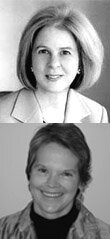 |
Elaine Pagels and Karen King: "The Gospel of Judas and The Shaping of Christianity"
Interview by Peter Stenshoel
Sunday April 15th, 2007 at 9pm on KPCC 89.3 FM
In April 2006 the National Geographic Society announced an astonishing archeological discovery: a gospel ascribed to Judas Iscariot. This extraordinary find raised a number of questions about the context for this and other gospel writings unearthed from the 2nd Century. How do they alter common assumptions about the early Christians and about ancient philosophical debates? How do they affect our understanding of Judeo-Christian cultural antecedents? Princeton University Professor of Religion, Elaine Pagels, and Harvard Divinity School Professor of Ecclesiastical History, Karen L. King, tell Zócalo Radio producer Peter Stenshoel about their new book, Reading Judas: The Gospel of Judas and the Shaping of Christianity, and discuss the revelations their ongoing scholarship has uncovered.
((()))*
|
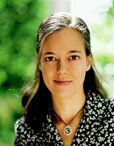 |
Alix Ohlin: "Why Mysteries Matter: Detectives, Literature, and Life"
Sunday April 8th, 2007 at 9pm on KPCC 89.3 FM
Fiction writer Alix Ohlin (The Missing Person and Babylon and Other Stories) says detective stories reflect the way we judge our own society: who’s an insider and who’s an outsider, who’s corrupt and who’s innocent, who’s capable of changing the world and who can find the clues to make sense of it. No crime, even a fictional one, takes place out of context. And mysteries, which tap into the darkest shades of that social context, speak to the chaos each of us may suspect is lurking beneath the surface of our days.
Recorded at Los Angeles Central Library before a live audience as part of the Zócalo “Public Square” Lecture Series.
((())* | (Videocast)*
|
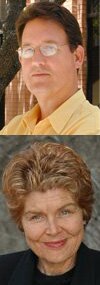 |
Dowell Myers, Torie Osborn: "Populations and Paradigms"
Interviews by Robert Greene, Los Angeles Times Editorial Page Sunday April 1st, 2007 at 9pm on KPCC 89.3 FM
Dowell Myers is professor of urban planning and demography in the School of Policy, Planning, and Development, at USC. He directs the school’s Population Dynamics Research Group. His latest book, Immigrants and Boomers: Forging a New Social Contract for the Future of America, Myers points out that the contentious national debate over immigration is obscuring an even more significant demographic change about to occur as the first wave of the Baby Boom generation retires, slowly draining the workforce and straining the federal budget. In this interview with the Los Angeles Times Editorial Page’s Robert Greene, Myers discusses the nexus between retiring Baby Boomers and working immigrants.
Torie Osborn is Senior Advisor to Los Angeles Mayor Antonio Villaraigosa on the issue of homelessness, an enormous social challenge for the city. L.A. Weekly has named Osborn "L.A.'s best all-round coalition builder." She speaks to Robert Greene about an unprecedented opportunity to seize the “new paradigm” of permanent solutions for the homeless population in L.A.
(()))*
|
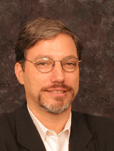 |
Eric Alterman, "Is Democracy in America Even Possible?"
Sunday March 25th, 2007 at 9pm on KPCC 89.3 FM
Eric Alterman, prolific author, media critic, and columnist for The Nation, explores the emergence of what he calls America's "pseudo-democracy." Walter Lippmann and John Dewey argued over the character and quality of American democracy in the 1920s with each offering devastating but almost perfectly oppositional critiques. In many ways, they were both correct, but the problems each identified have only metastasized. The media are supposed to be the watchdogs of democracy, but increasingly this has become more and more difficult to sustain if one looks at the cold hard reality of both our media and our political system.
This talk was recorded before a live audience at The National Center for the Preservation of Democracy as part of the Zócalo “Public Square” Lecture Series
((()))* | (Videocast)*
|
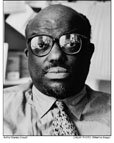 |
"Stanley Crouch, "Blues for Black America"
Sunday March 18th, 2007 at 9pm on KPCC 89.3 FM
Columnist, novelist, essayist, and critic Stanley Crouch discusses what he says is the "trouble with black popular culture." Calling it a crisis we can no longer ignore, Crouch traces the rise of hoodlums and pimps as role models and the "supposed sanitization" of the "n-word." Calling the phenomenon an "irresponsible rebellion," the ever brilliant, irascible, and controversial Crouch takes the entertainment industry to task and deplores what he sees as the debilitating social effects of low intellectual aspirations and "crass materialist fantasies."
This talk was recorded before a live audience at The California Endowment as part of the Zócalo “Public Square” Lecture Series.
((()))* | (Videocast)*
|
  |
"Dig This! From U2 to African wells"
Julie Cook, African Well Fund
Interviewed by Nate DiMeo
And from the Zócalo Archives: Nicolas de Torrenté interviewed by Daniel Costello
Sunday March 11th, 2007 at 9pm on KPCC 89.3 FM
Julie Cook, a fan of the rock group, U2, was inspired by the group to help bring clean drinking water to the poorest parts of Africa. The work of her U2 fan-based volunteer organization, “The African Well Fund,” has directly helped thousands of families and is responsible for at least a dozen new wells. She tells radio journalist Nate DiMeo how she helps people ten thousands miles away while maintaining her day job.
Nicolas de Torrenté, Executive Director, Doctors Without Borders/Médecins Sans Frontières (MSF), speaks with L.A. Times health reporter Daniel Costello about the tough logistics of sending doctors to war-torn areas. This reprise edition includes material never before broadcast.
((()))*
|

 |
Norah Vincent: “Identity, Deception, and Revelation”
Interviewed by Meghan Daum
And from the Zócalo Archives: Ron Weiner interviewed by Jennifer Berry
Sunday March 4th, 2007 at 9pm on KPCC 89.3 FM
Writer Norah Vincent spent a year and a half disguised as a man, entering into such fraternal cloisters as a bowling team, a monastery, and a men’s group. She also went on dates. Her book, “Self Made Man,” has received praise from, among others, Camille Paglia, Andrew Sullivan and Nat Hentoff. Los Angeles Times writer Meghan Daum plumbs the depths of this experience with Vincent, including the subject of writers using deception versus the insights gleaned.
Television writer Ron Weiner took his experiences about Internet dating, set them to music, and eventually developed a shrewd but hopeful musical about digitally-mediated romance. In this reprise broadcast, Zócalo’s Jennifer Berry asks Weiner about deception and identity issues raised by Internet dating.
((()))*
|

|
“This is Not a Pipe: Visual Mystery in Paintings and Photographs”
Curator Stephanie Barron and Photographer Amy Gayeski
Interviews by Nate DiMeo and Jennifer Berry
Sunday February 25th, 2007 at 9pm on KPCC 89.3 FM
Stephanie Barron, Senior Curator of the Los Angeles County Museum of Art, speaks to radio journalist Nate DiMeo about the exhibit: “Magritte and Contemporary Art: the Treachery of Images.”
The on-line magazine Pop Photo calls Amy Gayeski one of the “10 best young photographers” in America. Gayeski studied engineering and architecture, but soon realized her real love was photography. Zócalo’s Jennifer Berry takes a close look at her luminous and startlingly original work.
((()))*
|

|
"Tuning in the Broadband Channel: How the Internet Is Remaking the TV Business"
Moderated by Jon Healey of the Los Angeles Times Editorial Page Sunday February 18th, 2007 at 9pm on KPCC 89.3 FM
With more than 80 million Americans connecting to the Web at video-friendly speeds, TV networks have started using the Internet not just to promote their shows, but also to distribute them. The potential audience for online TV is already larger than the number of homes served by DirecTV and DISH combined and will soon be larger than the cable TV universe as well. In short, the Net is becoming a new set of channels--some free, some not. Mitch Singer of Sony Pictures, Ron Berryman of Fox Interactive, Blair Harrison of iFilm, Vivi Zigler of NBC, and Evan Young of TiVo visit Zócalo to discuss how the Internet is changing everything for the TV networks, producers, and service providers.
This talk was recorded live at The Culver Studios as part of the Zócalo “Public Square” Lecture Series and is presented by Zócalo and the Los Angeles Times Editorial Pages.
((()))* | (Videocast)*
|
|
Jim Newton, "Earl Warren and the Californiaization of America"
Sunday February 11th, 2007 at 9pm on KPCC 89.3 FM
The work of Earl Warren and the Warren Court is widely known and fiercely debated for its impact on far-flung fields such as racial equality, privacy, police procedure and voting rights. Jim Newton, Los Angeles Times City-County Bureau Chief and author of Justice for All: Earl Warren and the Nation He Made argues that over the 16 years that Warren held his post in Washington, he exported to the nation the values of California Progressivism and the experiences of a Bakersfield boyhood. Warren is remembered – fondly by some, with irritation by others – as perhaps the most consequential chief justice in American history. He may also be regarded as the man who launched the Californiaization of America.
This talk was recorded live at the Los Angeles Central Library as part of the Zócalo “Public Square” Lecture Series.
(((Audio Broadcast)))*
|
|
"L.A. vs. New York: Who's Got the Scoop on Hollywood?"
Patrick Goldstein, Laura Holson, John Horn, and Sharon Waxman Moderated by Dana Harris, film editor at Variety
Sunday February 4th, 2007 at 9pm on KPCC 89.3 FM
Four ace Hollywood journalists--Sharon Waxman and Laura Holson of The New York Times and Patrick Goldstein and John Horn of the Los Angeles Times--visit Zócalo to discuss how the Industry is perceived on opposite coasts. Does L.A.'s hometown paper have the edge in covering the quintessential Los Angeles business? Or does the New York Times bring an outsider's perspective that enlivens that newspaper's coverage of "the Industry"? Join us for a lively discussion of the trends and trendsetters of the film industry from the perspective of four experts. (This event is made possible, in part, by a grant from the John Randolph Haynes and Dora Haynes Foundation of Los Angeles.)
((()))*
|

|
Science and Sound: Michael Shermer and Richard King
Interviews by K.C. Cole and Peter Stenshoel
Sunday January 28, 2007 at 9pm on KPCC 89.3 FM
Scientific American columnist Michael Shermer is the Director of the Skeptics Society. He hosts the Skeptics Distinguished Lecture Series at Caltech, and is the author of many books, including Why People Believe Weird Things, How We Believe: Science, Skepticism, and the Search for God, and most recently, Why Darwin Matters: The Case Against Intelligent Design. Noted science writer K.C. Cole joins Shermer for an engaging and wide-ranging discussion about popular perceptions and misperceptions of science.
Richard King won an Academy Award for Best Sound Effects Editing on Master and Commander. Widely celebrated for his superb audio skills, King has designed, edited, and supervised the sound for numerous films, including War of the Worlds, Twister, Magnolia, Rob Roy, and Lemony Snicket’s A Series of Unfortunate Events. He speaks about his craft to Zócalo Radio’s producer, Peter Stenshoel.
((()))*
|
|
The Mystery of Redemption: Novelist Anna Monardo and Playwright Nancy Keystone
Interviews by Meghan Daum and Jennifer Berry
Sunday January 21, 2007 at 9pm on KPCC 89.3 FM
Anna Monardo’s work has appeared in numerous anthologies, including Prairie Schooner, Indiana Review, and The Sun. Her novel, "Falling In Love With Natassia," is an intense and sometimes dark family saga spanning the incongruous worlds of three generations. Los Angeles Times columnist Meghan Daum sits down with Anna Monardo for a lively conversation.
Nancy Keystone is a director, scenic designer, visual artist and playwright. She is the founder and artistic director of Critical Mass Performance Group. She speaks to Zócalo’s Jennifer Berry about “Apollo,” her play examining the complicated relationship between expatriate German rocket scientists, the segregated South of the Sixties, and the United States Space Program.
((()))*
|
|
The Dark Tree: L.A.'s Neighborhood Jazz Movement
Steven Isoardi and Dwight Trible
Interviews by Richard Paske and Peter Stenshoel
Sunday January 14, 2007 at 9pm on KPCC 89.3 FM
Jazz historian Steven Isoardi is the author of “The Dark Tree: Jazz and the Community Arts in Los Angeles.” In this interview with Richard Paske, producer of the web music magazine Notes From the Western Edge, Isoardi speaks about the neighborhood jazz movement in Los Angeles championed by jazz innovator, Horace Tapscott.
Dwight Trible is a gifted vocalist and jazz improviser who serves as vocal director for the Horace Tapscott Pan Afrikan Peoples Arkestra. He tells Zócalo Radio producer Peter Stenshoel about arriving in L.A. at the height of the jazz scene, his involvement with Horace Tapscott, and reflects on his own artistic process.
((()))*
|
|
Max Boot: "How Revolutions in Military Affairs have Shaped History"
Sunday January 7, 2007 at 9pm on KPCC 89.3 FM
Military historian and Los Angeles Times columnist Max Boot discusses how innovations in weaponry and tactics have not only transformed how wars are fought and won but also have guided the course of human events, from the formation of the first modern states 500 years ago, to the collapse of the Soviet Union, and the coming of al-Qaeda. The award-winning author of "The Savage Wars of Peace," and the recently published "War Made New," Boot puts forth a new intellectual framework for understanding contemporary geopolitics and examines what America must do to survive and prevail in the Information Age.
This talk was recorded live at The National Center for the Preservation of Democracy as part of Zócalo’s “Public Square” Lecture Series.
((()))*
|
home| 2006 Past Radio Broadcasts
*All excerpts from audio rebroadcasts to be used for print publication should credit the Zócalo "Public Square" Lecture Series.
|



